
500 polar bears melt hearts in new campaign
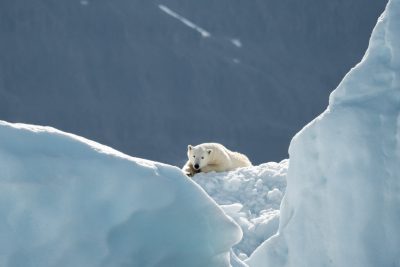
The World Wide Fund for Nature’s (WWF’s) Arctic programme has released a stop-motion film to coincide with COP26.
The campaign centres around the story of a young polar bear who tries to survive in the increasingly melting Arctic environment – a visual metaphor to remind world leaders that “once arctic ice melts, we can’t get it back."
Photography depicting weather disasters features in the backdrop, along with the words: “The Arctic is warming at a rate three-times faster than the rest of the planet, changing the Arctic ecosystems forever and causing destruction around the planet."
“Animations are powerful tools to tell stories with emotion in a simple, effective way,” said Andrea Norgen, senior communication manager at WWF’s Arctic programme.
“The climate crisis and the devastating effects it has on the Arctic and the rest of the world are not new, but this way of communicating the urgency to world leaders to limit global warming within 1.5°C is,” she added.
The film, which took a year to produce, was directed by NOMINT co-founder Yannis Konstantinidis in collaboration with motion designers Marcos Savignano and Jua Braga, with music by Ted Regklis.
"With every melted sculpture and ruined shot we were being reminded of the devastating issue at hand and how easy it is to underestimate it."
The 45-second short was produced using a combination of 3D printing, mold-making and ice-sculpting to create 500 polar bears and used more than 1,000 litres of ice.
Director and Nomint co-founder Konstantindis said the project was the most “taxing” project Nomint had worked on, both emotionally and technically.
“We completely underestimated the fact that once the ice starts melting you have no control over it, making it almost impossible to create a stop-motion film of this scale, which famously requires time between each shot,” he said. “It was especially hard emotionally, as with every melted sculpture and ruined shot we were being reminded of the devastating issue at hand and how easy it is to underestimate it.”
The World Wide Fund for Nature is an international non-governmental organisation founded in 1961 that works in the field of wilderness preservation and the reduction of human impact on the environment.