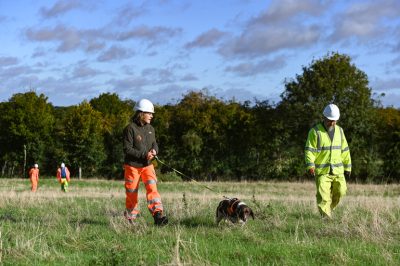
Dogs trained to sniff out newts
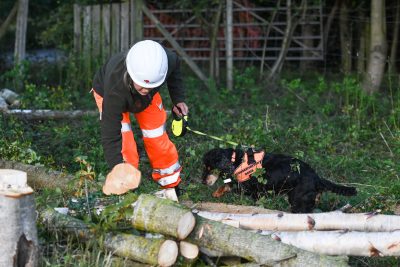
Two dogs specially trained to sniff out great crested newts are being put to work in trials by UK utility South East Water (SEW).
Arnie and Rocky are helping to identify where newts are living at key stages of construction throughout a project to install nearly 12 kilometres of water main between Fleet and Odiham in Hampshire. It is the first time the company has used this approach as opposed to the traditional method of installing plastic exclusion fencing to trap and move newts from the area where works are taking place.
“Protecting the environment is at the heart of everything we do," said Matthew Cooper, SEW project manager. "Great crested newts are a protected species and are small, meaning they are often hard to spot on land without using labour-intensive techniques that also use a lot of additional materials including plastic fencing and buckets.
“The traditional method would involve installing approximately two kilometres of fence which would be visible for months – becoming a significant eyesore to the conservation area and residents in the process. It also creates a barrier to other animals’ natural movement across the working area.
“By using these specially-trained dogs we are able to identify where the newts are living and ensure the impact on both the wider environment and ecology is kept to an absolute minimum. We also reduce our carbon footprint by reducing the number of times we need to visit site to set up fencing and buckets and search for newts."
Sniffer dogs are trained not to touch, harm or chase newts. They simply alert their handlers to where the animals may be hiding. A team of ecologists from engineering consultancy Atkins then hand-search the area identified and move the newts to a suitable location.
"This approach to detecting great crested newts is completely non-invasive"
Collin Singer, managing director at Wagtail UK, which trains the detection dogs added: “The use of sniffer dogs means we can cover a large amount of land in a safe and efficient manner. Most importantly, this approach to detecting great crested newts is completely non-invasive and we were delighted to assist South East Water with the project.”
Luke Gorman, associate director ecology at Atkins, said, “We have been using detection dogs on a number of projects, as it has shown to be a highly efficient, cost-effective and sustainable method of detecting great crested newts on development sites. It’s the first time that South East Water has used a detection dog on a pipeline project.
"However, they are trained to very high standards and have already been delivering results that enables our partner to continue with their project in confidence.”
The dogs will be used at regular intervals throughout the project under licence from Natural England.
Matthew continued: “This is a significant project which involves installing a very large length of water pipe from Fleet all the way to Odiham. We’re making really good progress and now we have pinpointed exactly where the newts are we will be able to safely continue to lay our water main through the Odiham countryside.”