
For Scottish peat's sake!
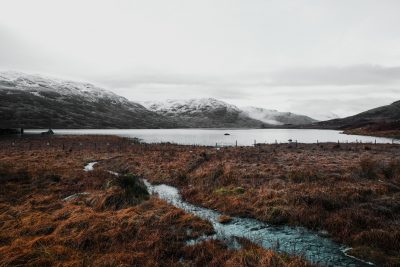
Peatland restoration projects on the Isle of Lewis in Scotland are restoring eroded landscapes to ensure they continue to act as vital carbon storage.
Scottish Water is working with local communities on the schemes at Loch Fasgro and Loch Orasaigh that will also help protect drinking water sources and biodiversity.
The projects have already returned areas of blanket bog to more natural conditions, stopping erosion, regulating the flow of water and raising the water table - all of which encourages peat-forming vegetation to thrive.
"It reduces the amount of dirty run-off and costs less to produce the water that we drink."
When peat dries out and cracks, the carbon it had been storing since its formation is released into the atmosphere as greenhouse gases. Repairing the damage to exposed peatlands and blocking drainage ditches to raise the water table at the sites allows natural peat forming vegetation to flourish and create the foundations for new peat to form.
Scottish Water says it aims to deliver around 330 hectares of restoration across Scotland in 2021/22, capturing and storing the equivalent of 231 to 924 tonnes of carbon dioxide per year.
The publicly owned water company is working in partnership with NatureScot’s Peatland Action team, as well as Urras Oighreachd Chàrlabhaigh (Carloway Estate Trust) and the Knock Carloway Common Grazings at Loch Fasgro; and Soval Estate and Ranish Common Grazings Committee at Loch Orasaigh.
Malcolm Walker, Scottish Water catchment liaison officer, said: “Peatlands are the largest natural carbon store in the world and play a vital role in tackling climate change - projects such as these which focus on restoring and protecting these areas are of increasing importance as we all focus on the drive towards net-zero emissions.
“When the peatland is exposed to the elements, it will dry out and erode. As well as releasing carbon into the environment, it also means the peat gets washed into our drinking water reservoirs and we then have to remove it during the treatment process at the water treatment works which can be costly and time consuming.”
The team has worked closely with the local estates and grazings committee at both locations to make sure the work is done sensitively, particularly with respect to the long tradition of peat cutting for domestic fuel which still continues on the islands.
Alan Iain MacLeod, of the Ranish Grazings Committee, said: “Peat cutting has been a part of our life for my lifetime, and the generations before me as well. You went out to do it with your neighbour and your neighbour came out with you and regardless of how many in the household, everybody in the household was involved.
“When we cut the peat, you’re left with this bare land part of it and if you have running water running off it, the silt will then make its way through the water course naturally into the reservoirs.
“Scottish Water explained to us exactly what they were wanting to do and how they were trying to do it, and we decided that we would like to take the opportunity to move forward with them to try and improve source water quality - if it reduces the amount of dirty run off, it costs them less to produce the water that we drink.”