
Mudlark exhibition reveals secrets of the Thames

Fascinating finds from the River Thames foreshore, an internationally important archaeological site holding thousands of years of London’s history, are on display in a major exhibition.
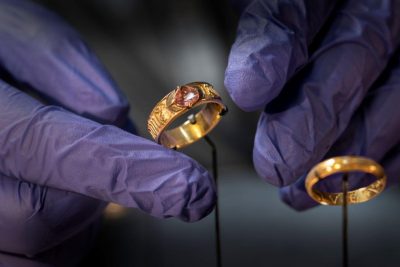
Secrets of the Thames: Mudlarking London’s Lost Treasures features rare discoveries including a Tudor headdress, a Medieval gold ring, an elaborately decorated Viking dagger and a pair of 18th century false teeth.
"We are lucky in London to have this amazing tidal river environment that has preserved so much of our past."
Running at London Museum Docklands, the exhibition explores the role of mudlarks in uncovering thousands of years of human history.
Mudlarking is the pastime of searching the Thames foreshore for historical artifacts and treasures. Historically a trade of the Victorian poor, in recent years the practice has grown to be a popular hobby for history lovers, with licensed mudlarks uncovering many significant new finds.
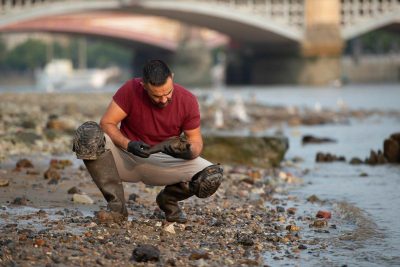
Objects range from the beautiful and elegant to the bizarre and macabre. A medieval gold ring uncovers a centuries-old love. Whilst the discovery of a typeface unearths a bitter feud between business partners.
An intricate 16th century ivory sundial tells of miraculous discovery, with its two halves unearthed by different mudlarks eight years apart. A Viking era dagger is personalised with the name of its owner.

With over 350 mudlarked objects on display, other curiosities and everyday objects include clay pipes, Medieval spectacles, 16th century wig curlers, and a Roman badge decorated with a phallus.
Revealed are often surprising stories behind these objects that continue to inform understanding of London. A behind-the-scenes experience showcases how finds are recorded and researched at the museum, and insights from mudlarks themselves about how they investigate and curate their collections.
An installation of The Moon by artist Luke Jerram will centre the importance of the moon and tides, which create the unique conditions for mudlarks to explore the river’s banks.
Kate Sumnall, curator at London Museum, said: “We are lucky in London to have this amazing tidal river environment that has preserved so much of our past.
"It is the longest archaeological site in London and here we find an unbelievably rich selection of finds, from beautifully worked prehistoric arrowheads to a small, ivory sun dial used to tell the time. Thanks to the dedication and expertise of today’s mudlarks, we are constantly uncovering new objects that inform our understanding of history.
"Secrets of the Thames showcases some of these fascinating objects and their journey from discovery to joining the museum. Above all, it is an exploration of love and desire, faith and loss, migration, community and culture. The stories of generations of people who have visited the city or called it home.”
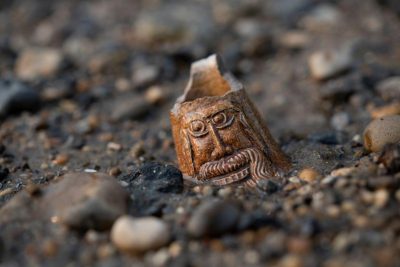
The River Thames has been a centre of human activity for over 10,000 years. From prehistoric communities that camped, hunted and farmed along the foreshore, to the arrival of Romans who founded Londinium, and Vikings who travelled to expand their territory into Britain, it contains evidence of Britain’s early days, as London burgeoned into the country’s first port of empire.
Each new departure and arrival has left traces behind relating to all aspects of human life.
Early records of mudlarking date back to the early -1800s when London’s poorest communities would search the foreshore for bits of metal, rope and coal to make their living. Subject to dangerous tides, it was a job often undertaken by children and women who would brave cold waters, broken glass and other hazards to find items that they could sell to feed their families.
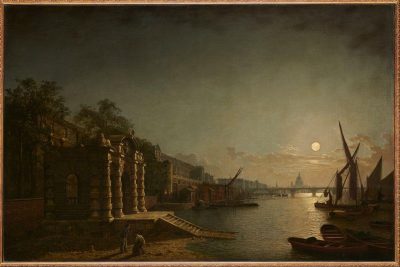
Today it is the preserve of licensed mudlarks who search the foreshore to find historical treasures revealed at low tide. The wet and clay environment of the river preserving objects that would usually deteriorate elsewhere.
The hobby has grown in popularity in recent years, with the Port of London Authority (PLA) having seen a significant increase in applications for licenses, particularly since 2020. All finds must be recorded and reported through the Portable Antiquities Scheme (PAS).
Secrets of the Thames: Mudlarking London’s lost treasures runs at London Museum Docklands until 1 March 2026.