
Global alliance will accelerate drought resilience

Drought resilience is the focus of a new global alliance of 50 governments and international organisations.
Led by the presidents of Senegal and Spain and supported by 29 countries, the International Drought Resilience Alliance has been established to accelerate action and better prepare countries for potential future disasters. The European Union and 20 other global organisations are also partners to the initiative and have committed to drive change in how the world tackles the growing drought risks.
Droughts are occurring more often and harder than ever before, increasing by a third since 2000, with a changing climate expected to cause more severe droughts in the future. The goal is to move from reactive emergency responses to building long-term resilience.
The 2022 Drought in Numbers report from the United Nations Convention to Combat Desertification (UNCCD) says droughts have increased in frequency by 29% since 2000, with some 55 million people affected every year. Recent droughts in Australia, Europe, western US, Chile and north-eastern and southern Africa, show that no country or region is immune to drought impacts, which can run into billions of dollars each year and exacerbate human suffering.
"Drought is a natural hazard but does not have to lead to human disaster."
President Pedro Sánchez Pérez-Castejón of Spain and Macky Sall of Senegal rallied world leaders at COP27 in Egypt in November 2022 to create the Alliance as “a specific solution for the United Nations” to the impacts of climate change.
In a joint statement, the two presidents said, “We are only as resilient to climate change as our land is. Building resilience to drought disasters is the way to secure the gains we make on each sustainable development goal, particularly for the most vulnerable people.
"The mission of the alliance is to give political impetus to make the land’s resilience to drought and climate change a reality by 2030.”
"We are only as resilient to climate change as our land is."
Ibrahim Thiaw, UNCCD executive secretary said, “We are in a race for drought resilience and it is a race we can win. Drought is a natural hazard but does not have to lead to human disaster.
"The solutions are available, and we can create a drought resilient world by increasing our ambition, harnessing the political will, and joining forces to act together.”
The Alliance will be bolstered by political commitments, including a €5 million seed fund to support and catalyse a process to mobilise more resources, and a commitment made by Kenya to plant 10 billion trees in 10 years. It calls on world leaders to make drought resilience a priority in national development and cooperation, including deepening the engagement of stakeholders, such as the private sector, in work on drought resilience.
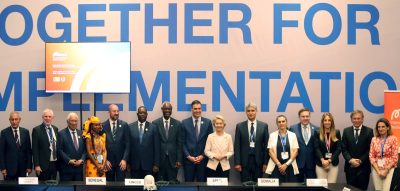
Among the key objectives of the Alliance is promoting the consolidation of regional initiatives to fast-track sharing of innovation, technology, transfer, and mobilisation of resources.
The Alliance will also collaborate with other platforms, including the initiative launched by the UN secretary-general and the World Meteorological Organization, to achieve universal coverage of early-warning systems and regional initiatives to gain maximum benefits of collaboration on drought resilience.
Building drought resilience presents an opportunity to significantly reduce the high human, social, and economic costs of drought. These range from the loss of life, livelihoods and biodiversity, to water and food insecurity, to disruption in the energy, transportation and tourism sectors, as well as forced migration, displacement, and conflicts over scarce resources.