
Gozo no bozo on seawater desalination

The Mediterranean island of Gozo has created an independent water supply using seawater desalination - and it is supplying Malta too.
Gozo is one of 21 islands that make up the Maltese archipelago and is known for its ancient ruins, beaches and scuba-diving sites. Its popularity as a tourism destination, attracting nearly half a million people each year, meant it urgently needing to create additional water supplies to handle peak seasonal demand, so the government of Malta commissioned the new €10 million Hondoq Bay desalination plant.
The plant uses uses a process called seawater reverse osmosis (SWRO) to produce 9,000m3 of water each day and over three million cubic meters per year. Reverse osmosis systems use high pressure pumps to force the seawater through semipermeable membranes to produce freshwater, leaving behind the concentrated saline, as well as minerals and pollutants. These unwanted impurities are either flushed away, recycled, or processed further.
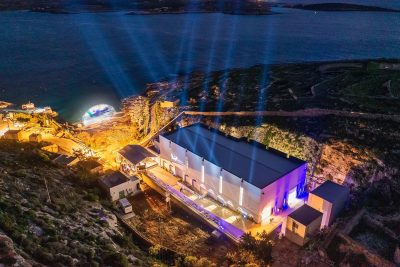
The Maltese Water Services Corporation’s says the historic project is one of the most efficient in the world and gives Gozo autonomy in water production. Gozo had historically depended on groundwater and a pipeline transferring water from Malta under the sea; now it can send water back to Malta, improving the efficiency and resilience of the water supply grid.
Reducing environmental impact was also a major consideration for the project and included designing and building a pipe under the seabed to avoid disturbing the marine environment. A technique called horizontal directional drilling (HDD) was used, which involves first creating a small borehole along the path of the planned pipe, from one surface point to the other. Then enlarging the bore to make way for the pipe, before it is pulled into place with specialist equipment, creating a continuous underground pipeline, exposed only at the endpoints.
"The plant operates at hours with low demand in Gozo and transfers water back to Malta, improving overall efficiency of the water supply grid.”
Not only was the seabed left undisturbed during installation, minimising impact on marine flora and fauna, but brine residue is discharged 350m out to sea.
“Malta’s Ministry of the Environment wanted to maintain the positioning of green desalination in the Hondoq Bay, with minimum impact on the environment," said Boaz Shitzer, chief executive of engineering contractor AST and technology company ROTEC. "As a result, environmental protection measures were at the core of the project strategy and execution.”
He added, “AST’s winning bid against several companies was based on low total water production cost, together with low energy consumption and near zero chemicals, due to advanced technologies and methods. WSC’s strategy included using off-peak hours production.
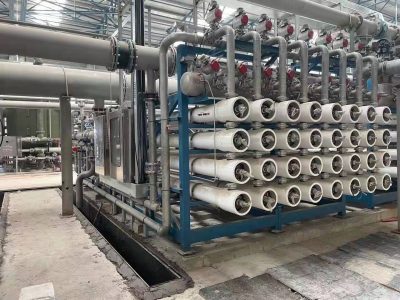
"The plant operates at hours with low demand in Gozo and transfers water back to Malta, improving overall efficiency of the water supply grid.”
The plant uses artificial intelligence to monitor plant performance, and predictive maintenance to manage upkeep of the pumps and membranes, with control handled centrally at WSC's main operations hub in Malta. The project is part of a €100 million programme funded by the European Union to improve water resources across the Maltese islands.