
Great Barrier Reef gives birth to coral babies
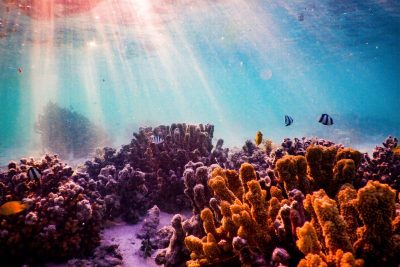
Divers and scientists have recorded the birth of billions of coral babies in Australia’s Great Barrier Reef.
The network of 2,500 reefs covering 348,000 square kilometers of this World Heritage listed natural wonder suffered significantly from coral bleaching caused by unusually warm ocean temperatures in 2016, 2017, and last year. Studies show the bleaching damaged two-thirds of the coral.
However, this incredible explosion of life is a positive signal that the world’s biggest coral reef ecosystem can recover from climate change say scientists.
After 18 months of border closures in Australia, the principal marine scientist from Reef Teach, Gareth Phillips, said this year’s coral spawning event is symbol of regeneration and hope. Phillips explained the timing of the 2021 coral spawn roughly coincides with the reopening of Australia.
“Nothing makes people happier than new life – and coral spawning is the world’s biggest proof of that. We are coming out of restrictions with a fresh leap of life just as the reef is spawning. That positivity is what people are feeling.”
Coral spawning occurs once a year when corals release tiny balls containing sperm and eggs into the water. These float to the surface where they break open, releasing both sperm and eggs to bump into each other and cross-fertilise.
"It is gratifying to see the reef give birth. It’s a strong demonstration that its ecological functions are intact and working."
Phillips and his crew studied this year’s spawning event as part of the Coral Index Project. They travel to three different high-value reef sites and mark out patches of the reef to study. As the reef spawns at night, the crew return to the specific locations for further analysis. It is the scientist’s version of an annual reef stocktake.
“It is gratifying to see the reef give birth. It’s a strong demonstration that its ecological functions are intact and working after being in a recovery phase for more than 18 months," added Phillips.
“The reef has gone through its own troubles like we all have, but it can still respond – and that gives us hope. I think we must all focus on the victories as we emerge from the pandemic.”