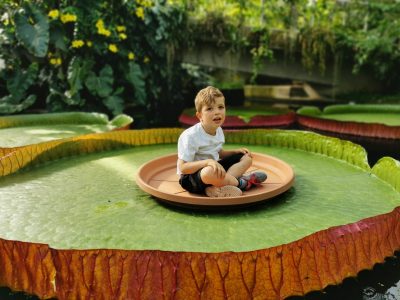
World's largest waterlily discovered at Kew

A species of giant waterlily grown at the Royal Botanic Gardens, Kew in London, UK, has been named as new to science and described by horticulturists as “one of the botanical wonders of the world”.
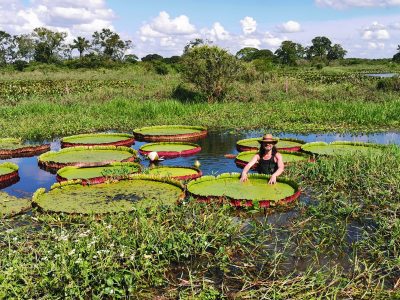
The newly identified species, named Victoria boliviana, is the first discovery of its type in more than a century – and breaks the record as the largest in the world, with leaves that grow up to three metres wide. A new scientific paper outlines the botanical discovery, which is part of the Victoria giant waterlily genus – a group of closely related species named after Queen Victoria.
After suspecting for years there was a third species of giant waterlily, Kew scientists collaborated with experts in the waterlily’s native home of Bolivia. This led to Bolivian institutions Santa Cruz de la Sierra Botanic Garden and La Rinconada Gardens donating giant waterlily seeds from the suspected third species.
These were germinated and grown at Kew, side-by-side with the two other species, Victoria amazonica and Victoria cruziana. Research included studying the species’ DNA, which found them to be genetically very different.
The data collected confirmed what the team had suspected – that there are in fact three species of the Victoria genus. The new species was named in honour of Kew's Bolivian partners and its South American home.
Kew biodiversity genomics researcher Natalia Przelomska said: “In the face of a fast rate of biodiversity loss, describing new species is a task of fundamental importance; we hope that our multidisciplinary framework might inspire other researchers who are seeking approaches to rapidly and robustly identify new species.”
“In the face of a fast rate of biodiversity loss, describing new species is a task of fundamental importance."
Research leader Alex Monro said: “Having this new data for Victoria and identifying a new species in the genus is an incredible achievement in botany — properly identifying and documenting plant diversity is crucial to protecting it and sustainably benefiting from it.
“This paper has been an extra special one to work on because it brings together expertise from across so many different fields – horticulture, science, and botanical art, and has involved working in close collaboration with our Bolivian partners.
"Victoria has a special place in the history of Kew, having been one of the reasons that Kew was saved from closure in the 1830s. To have played a role in improving knowledge about these magnificent and iconic plants has added resonance for the Kew partners.”
The new giant waterlily can now be seen in the Waterlily House and the Princess of Wales Conservatory at Kew Gardens.
Kew Gardens: A New Year in Bloom which features the story of Victoria boliviana will air on Channel 5 soon.
Kew's scientific paper was published in the journal Frontiers in Plant Science
Wonder of waterlilies
- Waterlilies are one of the oldest flowering plants
- The largest waterlily in the world is the newly discovered Victoria boliviana
- Giant waterlilies are native to tropical South America and Asia
- The leaf of the giant waterlily can support a weight up of at least 80 kilograms
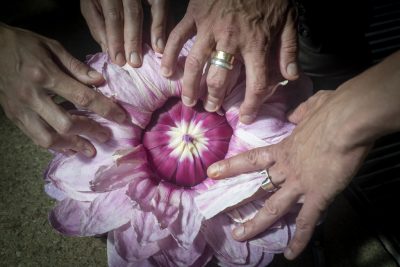
- The giant waterlily flower is white in colour on the first day and pink on the second and only blooms at night. These flowers emerge at dusk and close by noon
- The flower has sharp spines on its exterior which protect it from fish and animals
- Today, Kew is the only place in the world where you can see the three described species of Victoria together side by side.