
Kelp forests could keep us in food

The ocean's kelp forests are among the most productive ecosystems on Earth and could help meet the world’s future food security, according to an international team of researchers led by the University of Western Australia (UWA)
The brown seaweed that forms ocean forests is one of the world's fastest growing sources of biomass - plant-based material - and can be used as a fuel for heat or electricity production and a food source.
The seaweed species can grow to heights of 35 metres, providing a home for a host of sea-life, while absorbing carbon dioxide from seawater and the atmosphere. Some ocean forests could store as much carbon as the Amazon rainforest, according to an earlier study, and could play an overlooked role in climate change mitigation.
“Figuring out exactly how much these hidden forests grow across the globe was no easy task."
Lead author Albert Pessarrodona, research associate from UWA’s Oceans Institute and School of Biological Sciences, said: “Figuring out exactly how much these hidden forests grow across the globe was no easy task.
“On land, we can use satellites to measure tree growth, but underwater things are much more complicated as most satellites cannot make measurements at the depths kelp forests are found.”
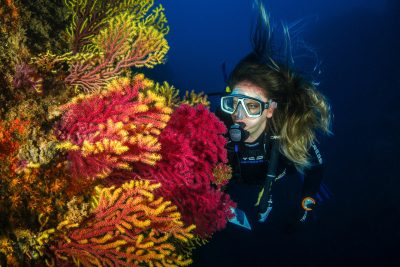
The team compiled data from hundreds of studies across the world where productivity has been measured by scuba divers. The findings were used to model how productivity changes with variables such as temperature, light, nutrients and wave exposure.
Pessarrodona said, “We found that, unlike on land where forest productivity peaks in tropical rainforests, productivity in the sea peaked around temperate regions, which are usually bathed in cool, nutrient-rich water."
Some of the most productive ocean forests included the Great African Sea Forest, which stretches around the southern tip of Africa, and the Great Southern Reef, a system of kelp-dominated reefs that covers the bottom third of Australia. Researchers found these two forests produce up to four times more biomass than most of the land crops cultivated today.
Harnessing the productivity of seaweeds also offers promising opportunities to help meet the world’s future food security and contribute toward greater sustainability, with the work conducted providing insights as to where greatest growth can be expected when scaling up seaweed aquaculture in coastal areas, the study concluded.