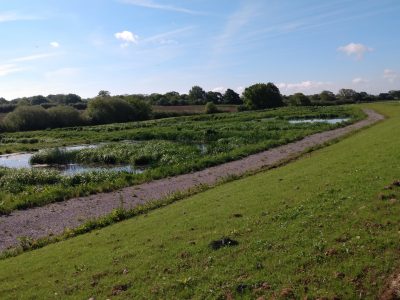
Wetlands offer alternative to chemical treatment

Constructed wetlands could offer a natural alternative to chemically treating wastewater before it is returned to the environment, an investigation by a UK water company has found.
Wessex’s Water study into its site at Cromhall water recycling centre, South Gloucestershire, could lead the way for the wider water sector. The wetland started operating in 2021 as part of a drive to enhance the water quality and ecology of the nearby Tortworth Brook.
Research into the effectiveness of the site, which was designed to remove phosphorus from sewage effluent – the first of its kind in the water industry – assessed how the wetland removed nutrients, organic pollutants and chemicals and enhanced the variety of living species present.
The findings revealed that wetlands like this can keep the concentration of phosphorus in effluent within limits permitted by the Environment Agency, which regulates water quality. In addition, ongoing research demonstrates the wetlands also help to remove microplastics and more than 70% of some compounds from the water, as well as reducing the bacteria being released into the environment by more than 95%
Ruth Barden, director of environmental solutions at Wessex Water, said, "Essentially, Cromhall is the first example of using a sustainable alternative to chemical dosing to achieve phosphorus reductions at sewage works. There has been a high level of interest as companies look to achieve net zero carbon and identify opportunities for wider environmental gains.
"As well as phosphorus removal, wetlands address other water quality parameters, such as bacterial reduction and their resistance to diseases and infections, as well as microplastics, which have implications for discharges to areas such as inland bathing waters.
"As well as phosphorus removal, wetlands address other water quality parameters, such as bacterial reduction and microplastics, which have implications for areas such as inland bathing waters."
Investigative findings
The analysis revealed the effectiveness of the wetland appeared to be at its greatest during summer months, with lower water flows, warmer temperatures, more daylight and significant aquatic plant growth. Findings on water quality found a 27.5% reduction in total phosphorus as well as a 62% reduction in ammonia and more than 60% in nitrogen.
The investigation also found an increase of 8.9 habitat units - a 111% increase in biodiversity value - with the projected increase expected to continue significantly. These included sightings of over 22 bird species and and six bat species.
Barden said, “We hope that this report will inform government policy and the evidence base to enable more wetland solutions to be implemented in the future by all water companies, not just Wessex Water."
Read a summary of the research here