
Rare voles return following river restoration
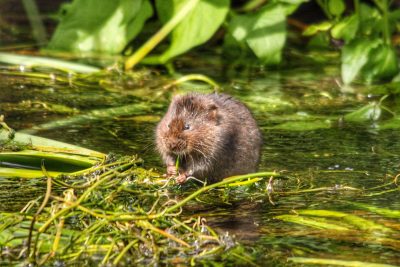
Thirty breeding pairs of endangered water voles have been discovered in Lincolnshire.
Conservation work undertaken by the Lincolnshire Rivers Trust, has resulted in the arrival of the “significant population” at Branston Beck, a small river, near Lincoln.
Water voles are the UK’s fastest declining mammal - between 1989 and 1998, the population fell by 90%, and they are now highly protected. The findings, made during an ecological survey, were said by the trust to be “encouraging”, demonstrating there is potential for the beck to sustain larger populations of water voles.
Restoration work took place as a part of the Bringing the Limestone Becks Back to Life project, funded by the Heritage Lottery Fund, in partnership with the Environment Agency and the Wild Trout Trust.
The project so far has added a large pond and two new backwaters with plans to introduce limestone gravel, create two new channels with small pond features, and plant native wetland vegetation along the river margins. These changes will provide food and burrowing habitat for water voles, restore habitat for fish such as brown trout and encourage spawning.
Senior Environment Agency officer David Hutchinson stressed the importance of these river restorations: “Historic changes to the limestone becks, such as straightening and deepening, have led to significant habitat change with the resulting loss of animals and plants. We have seen from our work with partners including the Lincolnshire Rivers Trust that the restoration of more natural habitats is critical to ensuring that a diverse range of species, including water voles can thrive.”
Lincolnshire Rivers Trust project officer Paige Donnelly is keen for volunteers to get involved in the next stage of conversation: “We will be holding community volunteer days and events to undertake practical conservation work and for people of all ages to learn about water voles and the beck habitat.”
"Habitat restoration is critical for ensuring species can thrive,"