
Scientists get ocean priorities in order

A new way of monitoring marine areas to help prioritise conservation efforts has been developed by an international team of scientists.
Oceans and their coasts provide numerous services to humans – they sequester excess carbon dioxide, supply oxygen, provide food and water, support livelihoods, and contribute to well-being and culture. The study, published in the journal Scientific Data, shows that there are large gaps in the protection of marine ecosystems - the high seas, for example, have a high conservation potential for biodiversity – but there are very few protected areas.
To determine the current status of the protection of marine and coastal habitats, the team of scientists, led by Joy Kumagai and Aidin Niamir from the Senckenberg Research Institute in Germany, investigated which countries had achieved the goals for protected and conserved areas. They developed two indicators that to determine the percentage of six coastal and marine habitats that have global data available and are located within protected and conserved areas, both in relation to individual countries and at the global level.
The protected habitats are seamounts, seagrass beds, cold-water coral reefs, warm-water coral reefs, mangrove forests, and salt marshes
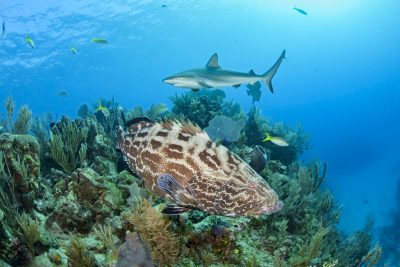
"These ecosystems are subject to both global and local pressure imposed by humans. Worldwide, one-third to one-half of endangered coastal and marine habitats have already been lost – accompanied by a decline in the services they provide to us humans,” explains Niamir. "Protected and conserved areas are one of the most common tools used to prevent these losses.”
“Currently, as part of the Conference of the Parties on Biological Diversity, governments are negotiating a goal to protect 30% of terrestrial and marine areas worldwide. We identified which countries do not have 30% of these marine habitats within protected or conserved areas – so that governments can prioritise these areas for protection,” says Kumagai.
The researchers’ analysis showed that more than 40% of the mangroves, coral reefs, and salt marshes are located in protected or conserved areas. In contrast, seamounts - large landforms that rise from the ocean floor - are often found in areas outside national jurisdiction and therefore have not been as protected, with less than 10% of their area under protection.
"We identified which countries do not have 30% of these marine habitats within protected or conserved areas – so that governments can prioritise these areas for protection."
“The lack of protection on the high seas poses a major problem, since this area also offers the greatest opportunity for habitat conservation, in terms of area, if its protection were increased to 30 percent,” said Niamir.
The distribution of protected areas also varies widely at the country level: in 11.6% of the countries affected, none of the marine and coastal habitats included in the study are located in a protected or conserved area.
“Collectively, our results not only reflect the current status of protection but also draw attention to the need for ecologically representative protected and conserved areas. We also need more freely available global habitat data here to understand and protect valuable marine and coastal areas,” concludes Kumagai.