
Scientists reveal how humans alter city waters

De-urbanisation of city water sources may be necessary to establish more natural water ecosystems, say scientists in Germany.
Whether an armpit, garden soil or water, almost every place on earth has its own natural bacterial community, known as a microbiome. They are often well adapted and stable in a particular environment - whether a human mouth or a freshwater lake.
Due to demographic changes and other factors, people are altering environments at an increasing rate, especially in and around cities and towns, in the process called urbanisation.
For a study published in the journal Science of the Total Environment, bacterial communities in urban water bodies and wastewater in Berlin were examined, and compared with lakes from surrounding rural regions, which had experienced less human impact. The results reveal that urbanisation introduces large amounts of nutrients, chemical pollutants and antimicrobial products which change the makeup of the microbiome.
“We wanted to know whether urban water shows signatures of urbanisation that are predictive of the types of bacteria present in a given community within the city limits.”
The change occurs because the affected environment favours groups of bacteria that contain human pathogenic bacteria, with unknown consequences for ecosystems, including human and animal health. By altering environments, humans also change the bacterial composition of such places by creating new conditions that favour some groups of bacteria over others.
The scientists, from Leibniz Institute for Freshwater Ecology & Inland Fisheries (IGB) and Leibniz Institute for Zoo & Wildlife Research (LIZW), along with colleagues from members of the Leibniz Research Alliance, tracked the changes in bacterial composition connected with urbanisation. They demonstrated that microbiomes in urban waterbodies and wastewater in Berlin are distinctly different from those of rural lakes in surrounding regions in the federal states of Brandenburg and Mecklenburg-Vorpommern.
Urbanisation not only introduces human bacteria into waters, it can also bring excessive amounts of nutrients which can cause eutrophication - where excessive plant and algal growth impairs the water environment. Along with chemical pollutants and antimicrobial products such as antibiotics, this can drastically favour specific bacteria over others and change the makeup of the microbiome.
“We wanted to know whether urban water shows signatures of urbanisation that are predictive of the types of bacteria present in a given community within the city limits,” says Professor Hans Peter Grossart of the IGB, co-principle investigator of the study.
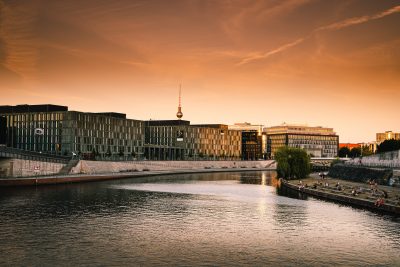
The results demonstrate that multiple bacterial groups are enriched in urban waters, the most extreme examples being found in the inflows and outflows of a wastewater treatment plant, pointing to a humanisation of urban lake microbiomes.
“Surprisingly, the enriched bacterial groups in urban environments are those that often contain pathogenic species. This suggests that if a pathogen gets into such an environment, it will find a very supportive environment in which to grow,” says Professor Alex Greenwood, head of the LIZW Department of Wildlife Diseases and co-principle investigator of the study.
This could potentially lead to outbreaks in such environments compared to rural water bodies, where such favourable conditions for pathogens were not found in general.
In the future, water quality requirements may mean de-urbanising the microbiomes of city water sources to establish more natural water ecosystems within cities, say the scientists.
This will become increasingly challenging and important as climate change makes many urban areas drier and more nutrient rich, further altering the bacterial communities of urbanised water. It will have profound effects for human and animal health as the risk of contamination with harmful microbes increases.