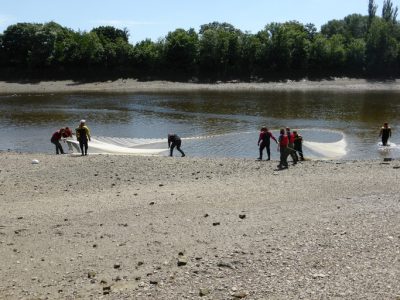
River Thames health check reveals sharks
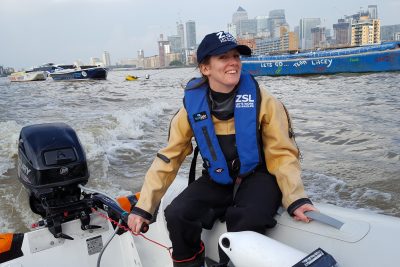
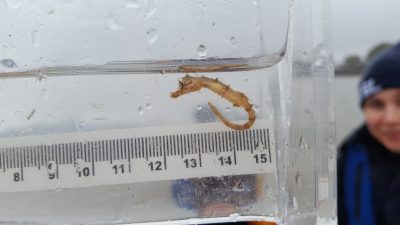
Seahorses, seals and three types of shark are among the surprise species found to be living in the River Thames, London.
The discoveries were made during the first complete health check of the capital’s waterway, which has revealed a bright picture for wildlife and ecosystem recovery. The State of the Thames Report was led by Zoological Society of London (ZSL) to demonstrate what has changed for the Thames since it was declared ‘biologically dead’ in 1957.
Highlighting the impact of conservation efforts, evidence was found of an increase in bird species, marine mammals and natural habitats such as carbon-capturing saltmarsh. The shark species found were tope, starry smooth hound and spurdog.
Alison Debney, conservation programme at ZSL, lead, said: “The Thames estuary and its associated ‘blue carbon’ habitats are critically important in our fight to mitigate climate change and build a strong and resilient future for nature and people.
“This report has enabled us to really look at how far the Thames has come on its journey to recovery since it was declared biologically dead, and in some cases, set baselines to build from in the future.”
It’s not all good news, however, with the report raising climate change and pollution concerns. Climate change has increased the temperature of the Thames by 0.2⁰C per year on average. As water temperature and sea levels continue to rise, the estuary’s wildlife will be particularly impacted, through changes to species’ lifecycles and ranges.
"We can really look at how far the Thames has come on its journey to recovery,"
While short term trends reveal that water quality has improved, there has been a long-term increase in nitrate concentrations, with industrial and sewage effluent identified as the main source. To address this threat, a new London ‘super sewer’ called the Thames Tideway Tunnel is under construction.
Liz Wood-Griffiths, head of contents at Tideway, said: “This report comes at a critical time and highlights the urgent need for the Thames Tideway Tunnel. The new sewer, which is due to be complete in 2025, is designed to capture more than 95 per cent of the sewage spills that enter the River from London’s Victorian sewer system. It will have a significant impact on the water quality, making it a much healthier environment for wildlife to survive and flourish”.
The Thames supports over 115 species of fish, 92 species of bird and has almost 600 hectares of saltmarsh which is a crucial habitat for a range of wildlife. For the nine million people living alongside it, it also provides drinking water, food, livelihoods, and protection from coastal flooding.
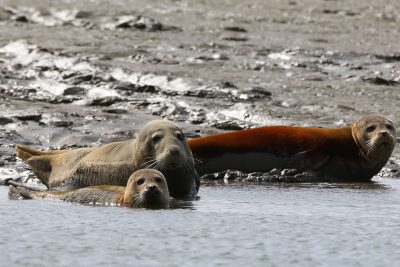
Alongside technological solutions, it is well recognised that nature-based solutions such as habitat restoration, can also provide benefits for both biodiversity and protecting against the impacts of climate change. Habitats, such as mudflats, wetlands, tidal marshes, reedbeds and saltmarsh for example, are not only important places for species of birds, fish, and seals, but also critical ‘blue carbon’ stores. Their role in offsetting the damaging impacts of human-educed carbon emissions means that protecting them is even more essential.
Alison continued: “While there have been heavy, historic losses of the natural habitat to urban development, ZSL is working closely with partners to create new estuarine habitat including native oysters, seagrass and saltmarsh habitat. Between them, these not only help to restore wildlife in the river, but also act as natural flood defences, and help to mitigate against extreme weather such as storms and floods.”