
Inspired innovators turn water pollution into paint

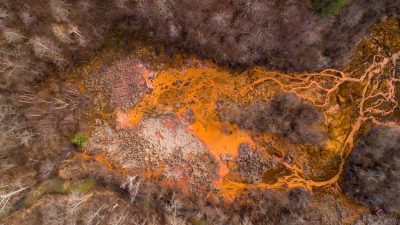
Across the US, abandoned mines continue to spill toxic waste into streams and rivers - but now a social enterprise is tackling the problem by turning the pollution into vibrant pigments.
The True Pigments pilot plant, a collaboration among Ohio University, environmental advocacy group Rural Action and Ohio’s Department of Natural Resources, aims to harvest the iron oxide that stains the water bright orange and turn it into pigment for bricks and tiles as well as artist-grade paints.
Across the country, waste from abandoned and bankrupt coal and metal mines has contaminated some 20,000km (12,000 miles) of waterways. This legacy pollution — the toxic by-product from over half a century of mining — threatens drinking water, corrodes infrastructure and devastates aquatic life. However, clean-up costs for acid mine drainage remain prohibitive as it requires the construction of water treatment plants.
In Truetown, home of the largest acid mine drainage (AMD) in Ohio, nearly 3,000 litres (1,000 gallons) per minute gushes out of an abandoned mine, dumping 1 million kilograms (2.2 million pounds) of iron into Sunday Creek each year. True Pigments is turning this pollution into a valuable commodity that will pay for stream restoration, create jobs in rural communities, and fund additional watershed restorations.
“It has real potential to help a lot of communities, because in addition to cleaning up the stream it’s a potential revenue source."
Water from mines is difficult to treat and harmful to the ecosystem, but it does have one thing going for it- the water contains iron oxide, an essential ingredient for the pigment found in paint.
Working with the University of Ohio, Rural Action created a small water treatment centre and began collecting the contaminated water in large tanks. After the water is collected, a base is added to neutralize its acidity, and then oxygen is added. The result is non-toxic iron oxide sinks to the bottom of the tank, while clean water stays at the top. The clean water is returned to the river, and the iron oxide is dried into pigments.
In collaboration with Gamblin Colors, a Portland-based paint company, True Pigments have released a limited edition range of oil paints named Reclaimed Earth Colors.
“The goal of the project is that the anticipated revenue from pigment sales would be used to offset plant operation and maintenance costs,” said Sarah Wickham, communications officer for Ohio’s Department of Natural Resources.
“The discharge from the mine will never go away,” she said. “Water quality could improve over decades but will always continue to flow and produce acid mine drainage.”
Guy Riefler, professor of civil engineering and the primary researcher for True Pigments, said a facility like True Pigments is “absolutely replicable” across polluted sites in Appalachia.
“I think it has real potential to help a lot of communities,” said Riefler. “Because in addition to cleaning up the stream it’s a potential revenue source.”
What is clear is that through collaboration, the team have created something that draws from engineering, art, social enterprise, and watershed restoration - resulting in a game-changing technology that longer term could help transform AMD pollution into a commodity that pays for water treatment.