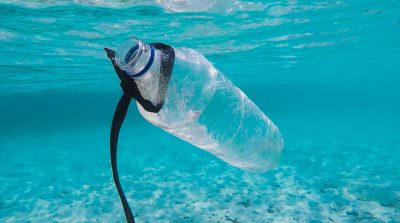
Two hundred countries pledge action on plastic

The fight against plastic pollution has scored a big win, following a pledge by nearly 200 countries to take collaborative action.
The United Nations Environment Assembly has agreed to launch negotiations on a legally-binding global agreement which aims to reduce and eventually eliminate plastic pollution in all environments.
Speaking from Nairobi, Kenya, where discussions were held, European commissioner for environment, oceans and fisheries Virginijus Sinkevičius welcomed the agreement: “About 11 million tonnes of plastic currently enter the ocean every year and this amount will triple in the next 20 years without an effective international response.
“I am glad that with EU input, the global community today stepped up to fight plastics pollution. We will engage actively in the discussions of a legally-binding agreement that looks at all stages of the plastics lifecycle, from product design to waste.”
The future agreement will aim to bring all stakeholders together to close the gaps that existing initiatives and agreements do not address, especially at the design and production phases of the plastics lifecycle.
"We are determined to keep pushing for ambitious global action, as the fight against the climate and biodiversity crises must involve all of us.”
Executive vice-president for the European Commission’s Green Deal, Frans Timmermans, said: “It is encouraging to see the global community come together at this time of crisis.
“Ever since the European plastics strategy was presented in 2018, the European Union has been a driving force to tackle plastic pollution. We are determined to keep pushing for ambitious global action, as the fight against the climate and biodiversity crises must involve all of us.”
Plastic facts:
Around 300 million tonnes of plastic waste - equivalent to the weight of the human population - is produced every year.
Only 9% is recycled, most of the rest accumulates in landfills or the natural environment. Over time, these materials break down into microplastics that create additional pollutants into the human food chain, freshwater systems, and air.
If we continue with business as usual, by 2040 the world would only see a 7% reduction of plastic discharged into the oceans - which is why immediate global action must be taken.