
Vlogging turtles - heroes in a half-shell!

A new initiative is pairing turtles with technology in a bid to rescue and restore vital undersea meadows.
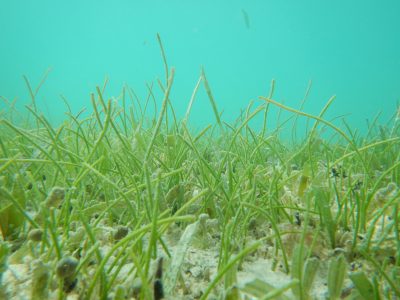
Marine scientists Marjolijn Christianen and Fee Smulders from Wageningen University & Research Centre in the Netherlands have spent years researching seagrass habitats and studying the threats to seagrass meadows from a variety of sources - some more unexpected than others. Seagrasses provide food, habitat and nursery areas for numerous vertebrate and invertebrate species.
They are also extremely important for carbon sequestration, which can help combat climate change. Each square metre of seagrass meadows can capture up to twice as much carbon as temperate and tropical forests.
Seagrass meadows are found all over the world, but are declining due to a barrage of threats including urban, industrial and agricultural run-off; coastal development and dredging; unregulated fishing and boating activities - and climate change.
“It’s good to raise awareness of the importance of these ecosystems. It prompts governments to talk about it and to release funding."
Unexpected threat
There’s another, much less obvious big threat to seagrass. It comes courtesy of the sea turtle, which is thriving thanks to various conservation projects.
It is obviously great that initiatives such as the protection of nests have led to sea turtle numbers going back up. However, sea turtles predominately eat seagrass, and in places where seagrass is scarce the turtles are adding to the pressure.
“We’re getting to the point where the system can no longer restore itself," says Smulders, who is a PhD candidate at the university. "It’s a negative spiral in which turtles are killing their own habitat.
"We have footage in which we can see up to 30 turtles per hectare hovering over the seagrass meadows. Their grazing habits damage the structure of the seagrass.
“In Bermuda there was a huge meadow that was over-grazed. As an experiment, we put a cage over a section of the seabed so that the turtles couldn’t reach it.
"We found that the seagrass was already so damaged that it barely grew back anymore. It will do eventually, but it’ll take decades. In the meantime any sea turtles there will have starved.”
Sea turtles as vloggers
Before this problem can be meaningfully managed, researchers need to know more about the turtle's grazing habits. The answer lies in technology - a number of turtles have had cameras attached to them as a way of documenting their movements and eating patterns.
The cameras were glued to the turtles’ shells and fell off after a few hours. They were then collected and the data was analysed.
“This allows us to look at what exactly a turtle eats, the choices it makes, the times of day it eats, and how it interacts with other animals in the seagrass meadows,” said Dr Marjolijn Christianen, associate professor at Wageningen University. “We think these behaviours can give us an insight into the health of the ecosystem as a whole, but this hasn’t been researched before.
"Camera systems have become very advanced. You can use them to find answers to a huge number of research questions."
Christianen added that this research will soon be applied to manatees as well and there are plans underway to equip a number of them with a temporary camera.
“It’s good to raise awareness of the importance of these ecosystems. It prompts governments to talk about it and to release funding,” explained Christianen.
“We need to consider the effects on seagrass. That’s why we need a clearer idea of where seagrass grows, what it needs for it to be able to restore itself, and where there’s the greatest potential for rewilding to take place.”
Find out how human waste could be the key to revitalising these important marine habitats.