
World first as sewage is recycled into super-fertiliser

A UK water company is using new carbon-capture technology to recycle waste into a super fertiliser, in what is a world first.
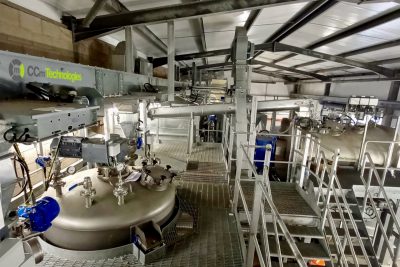
Severn Trent has introduced the pioneering technology to the sewage treatment process at its Minworth site near Birmingham. This new solution will use captured carbon dioxide and use it to recover the goodness that is locked inside wastewater, turning it into sustainable fertiliser.
The utility has joined forces with clean tech company CCm Technologies to deliver the new approach, allowing them to significantly reduce greenhouse gas emissions of fertilisers used by farmers, helping Severn Trent to reach its 2030 net zero commitment.
Severn Trent currently generates the equivalent of half the energy it needs from renewable sources – mainly from anaerobic digestion and biogas. This new process will bolster the company’s performance in this space, helping to achieve its triple carbon pledge of 100% renewable energy, net zero carbon emissions and a fleet of vehicles that are entirely electric by 2030.
"This new approach has taken us a step closer to making sure absolutely nothing is wasted in the sewage treatment process.”
Rich Walwyn, head of asset intelligence & innovation at Severn Trent, said: “It’s exciting to see this project reach the point where the first lot of this super fertiliser is starting to roll off the conveyor belt.
“Using carbon capture technology, we’re able to treat waste in a much greener and more efficient way than ever before, as well as getting a fantastic product at the end, which has carbon locked into it.
Pawel Kisielewski, chief executive, at CCm Technologies, said: “This partnership means we can take nutrients from wastewater and turn them into fertilisers that can go back into the ground and contribute to growing healthy crops.
“Circular economy solutions like ours are crucial to addressing environmental challenges. It’s fantastic this partnership allows us to change otherwise waste resources and damaging emissions into benefits for both the farming and water industry. Hopefully, as these solutions begin to scale, we can feel reassured that the food we’re eating and water we’re using is working with rather than against nature.”
The project has been partly funded by the Department for Business, Energy & Industrial Strategy (BEIS), as part of their Industrial Energy Efficiency Accelerator (IEEA) programme which supports commercial scale demonstrations of novel technologies, with the potential to reduce energy consumption and carbon emissions and accelerate their uptake in industry.