
Skating on black ice is safer

Did you know you can tell whether an icy lake is safe to skate on by looking at the colour? And that white ice is riskier than black?
The ice that forms on lakes can have different qualities, and you can tell the difference just by observing the colour. According to scientists, white ice is more unstable and can carry much less weight, making it risky to use for transportation and activities like fishing, walking and skating.
Knowing the quality of lake-ice is important both for safety and organic life, but how it varies over time and in different locations has been largely unknown until recently. During winter 2021-22 - one of the warmest since 1880 - an international research team led by Uppsala University in Sweden carried out a lake-ice sampling campaign throughout the northern hemisphere.
"We estimated that 10cm of ice under black ice conditions allows a load of 1,753kg, while under white ice conditions they can only support a load of up to 175 kilograms."
The team, led by Sweden's Uppsala University, showed that lake-ice during this period generally comprised white ice, which at times accounted for up to 100% of total ice thickness. The amount of sunlight that can penetrate the ice is significantly reduced when white, which as well as making the ice more unstable, threatens the growth and reproduction of all organisms that photosynthesise, which can disrupt the entire food web.
"In the IceBlitz sampling campaign, we took 167 ice cores in ten different countries," researcher Hans-Peter Grossart from the Leibniz Institute of Freshwater Ecology in Berlin, Germany, who was involved in the study.
"In January, most lakes had a thin layer of white ice, which then gradually grew throughout the ice cover. In the period before the ice melted, white ice was the predominant ice type on most of the lakes we sampled."
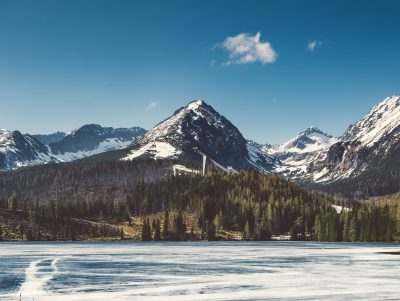
White lake-ice usually forms when snow accumulates on ice, melts and refreezes, or when rain falls on the snow layer and forms slush, which can subsequently freeze and become white ice. This usually occurs air temperatures fluctuate around freezing.
"With continued global warming, the prevalence of white ice in the critical period before melt is likely to increase significantly," says Professor Gesa Weyhenmeyer, lead author of the study from Uppsala University. "In school, we learn that it's okay to walk on ice if the ice thickness is 10cm or more.
"We estimated that 10cm of ice under black ice conditions allows a load of 1,753kg, while under white ice conditions they can only support a load of up to 175kg only. Thus, the differences in ice stability are very large.
"Because the load-bearing capacity of white ice is relatively low, an increase in the proportion of white ice can threaten the use of seasonally ice-covered lakes for livelihood, recreation, transport and other purposes," she warned.
White ice has a reflectance many times higher than black ice, so only small amounts of light penetrate through white ice. Low light conditions in spring caused by a white ice cover and snow on the ice are critical for the development of photoautotrophs organisms - those whose growth and reproduction depend on light.
Although they have evolved a variety of survival strategies, changes caused by snow and white ice has a cascading effect on the food web, with significant consequences for microbial, zooplankton, and fish.
"Ice safety guidelines need to be renewed, and the thickness of white ice also needs to be considered as an important regulator of physical, chemical and biological processes in lakes," Weyhenmeyer concluded.