
Book reveals families' stories of water crisis

A new book about the global water crisis tells the stories of 350 families in Kenya and Bangladesh.
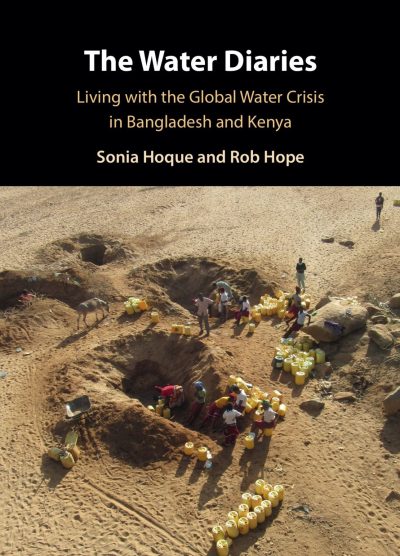
The Water Diaries, written by Dr Sonia Hoque and Professor Rob Hope, from the University of Oxford, reveals the struggles and strategies of communities on the frontline and makes an impassioned call for change.
Every day, over two billion people must make difficult choices to find and use water for drinking, cooking, washing, hygiene, or watering livestock. The Water Diaries, published by Cambridge University Press, gives a unique insight into their lives and the decisions they must make to survive.
For a year, the recorded their daily water struggles, documenting where they obtained their water, what they paid, and whether it was sufficient for their needs.
“Our project revealed the sophisticated approaches these families employ to survive amidst poor access to clean water,” explains Hope, an expert in water policy. “Their diaries offer crucial insights into social and cultural practices that do not always align with top-down policies - often where interventions fail.”
"We examine how existing policies can be rethought to better reallocate risks between governments, businesses and communities, for a water secure future."
The book includes four detailed case studies of urban and rural areas, and critically reviews existing policy and institutional design. Seasonal river diaries provide insight into how low-income communities in Dhaka, Bangladesh’s capital city, cope with rivers polluted by the textile industry.
The authors call for new ways of allocating water risks and responsibilities fairly and effectively between government, communities, enterprises, and water users.
“Our book offers a powerful and personal look at the global water crisis through the voices of those most affected. We are not just looking at infrastructure but at the daily experiences of people living with water insecurity,” says Hoque, an environmental social scientist.
“Through their own words and records, we see the trade-offs they make every day and how existing systems fail them. We critically examine how existing policies and institutional frameworks can be rethought to better reallocate risks between governments, businesses and communities, for a water secure future.
Transferring responsibility for water infrastructure from local communities to tightly regulated professional service providers, financed by results-based contracts, is key, the authors say.
“The positive news is that much can be done to improve people’s lives,” says Hoque.
“New initiatives and investments have emerged from partnerships with governments and donors, showing that change is possible when policies are better aligned with lived realities.”
The Water Diaries is an output of a global, University of Oxford-led research programme, REACH, to improve water security for millions of people in Asia and Africa.