Water quality data made available on tap

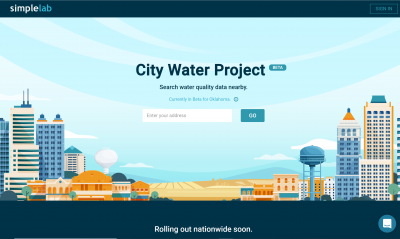
Communities across the United States will soon be able to tap into a new online service allowing people to search local water quality data for free.
Beginning with cities and towns in the state of Oklahoma, and rolling out to 46 states by summer 2022, City Water Project provides access to the latest water quality data for entire towns and cities, along with health, taste and plumbing analysis.
The concept is from Californian environmental health testing company SimpleLab and the tool is already being used by water filtration companies and local governments. The aim is to give citizens and consumers reliable, transparent water quality data.
"We’ve cleaned and standardised over 100 million water quality results and distilled key insights for people looking to understand their local water quality."
The company says City Water Project's data gives insight into the types of risks people could face at home, such as the presence of manufactured PFAS chemicals and metals like lead, manganese, arsenic, and uranium. The company says even radiological data can be obtained from test results collected at both local treatment plants and kitchen sinks.
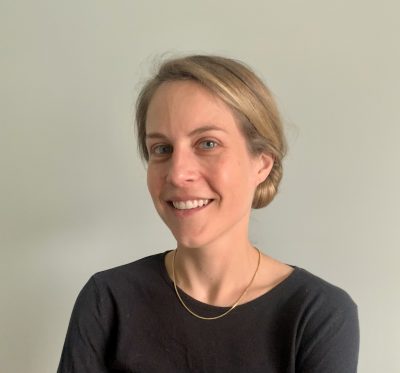
Jess Goddard, chief science officer at SimpleLab, believes this project will benefit millions of people, "The need for accurate, up-to-date water quality data is more pressing than ever," she said. "This is the first time household and utility water quality testing data has been made accessible.
"We’ve cleaned and standardised over 100 million water quality results and distilled key insights for people looking to understand their local water quality."
World first
City Water Project is the first tool of its kind to present both historical utility water quality data and point-of-use tap water quality data from households. Available free online, it compiles millions of state-level water quality datapoints and makes it much more accessible to the public.
City Water Project also includes five years of private water quality testing data from lab results in more than 50,000 anonymised US homes, collected by users who have tested through SimpleLab. The online tool uses techniques for mapping utility service area boundaries and visualising vital water utility information for specific cities and towns.
"For consumers to have confidence in their tap water, they need clearer water quality information."
Johnny Pujol, chief executive, SimpleLab, "This summer, we’re rolling it out across the entire country. For consumers to have confidence in their tap water, they need clearer water quality information."
Decreased funding
Ninety-two per cent of the US is served by a public water system. Today, water systems are more pressured than ever to meet strict regulatory requirements that cover more than 90 different contaminants present in drinking water.
While most systems successfully keep water safe, many are struggling due to a lack of adequate funding and increasingly polluted water sources. This means there is pressure on water systems from all many sides as environmental quality goes down, water becomes harder to clean, regulations pile up, and costs increase.
Beyond public funding, this means that progress toward transparent and open data communication is squeezed. There are nearly 50,000 active, community water systems nationwide across a range of town and city sizes with different contaminant challenges and financial capacities so it is very hard to get a clear view of water quality overall.
A detailed and easy to use platform
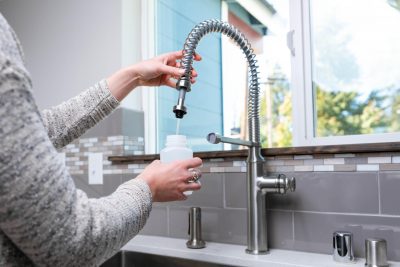
Consumers can search their street address online and get free access to the most current water quality testing data from around their city or town. This includes details on contaminants and pollutants identified through testing conducted by their local water utility as well as data collected by SimpleLab at the tap and analysed at laboratories certified by the Environmental Protection Agency.
People can also see their utility's water quality over the last ten years as, for example, bad quality in the distribution line may be the utility's responsibility but at the tap can be the responsibility of homeowners.