
Plastic fantastic for reclaimed model sailboat

A model sailing boat built out of recycled flip-flops and other reclaimed materials has embarked on a global tour to spread the message on waste, pollution and recycling.
The model is based on a full-scale dhow-style vessel that was the world’s first 100% recycled plastic sailing boat. It was built around four years ago from reclaimed materials found on Kenya’s beaches, including some 30,000 discarded flip-flops.
Both boats stem from the Flipflopi project, which is supported by researchers and lecturers from Northumbria University in north-east England. In the last ten months alone the project has recovered 135 tonnes of post-consumer plastics from the Lamu Archipelago on the Kenyan coast, which has a population of just 50,000.
“Research shows that 70% of marine macro litter collected is plastic, but our mantra is that plastic is wealth!”
The model boat has now arrived in Lisbon, Portugal as part of a travelling exhibition - Plastic: Remaking Our World, which is being held at the city's Museum of Art, Architecture & Technology (MAAT) until the end of August. According to the organisers, it looks at “the revolutionary and yet deeply controversial” range of synthetic products collectively referred to as plastics, opening with a film installation exploring the geological relationship between plastic and nature.
The Flipflopi model is the final exhibit in the show and serves as an inspirational example of contemporary efforts to rethink plastic and implement alternatives that reduce production and consumption, as well as encouraging reuse. Simon Scott-Harden, an assistant professor at Northumbria University’s school of design is part of the team behind Flipflopi, and was involved in the engineering and design of the model.
He explains, “We adopt what we call a full systems approach to influence behaviour change, made up of education, innovation and captivating campaigns to keep the issue front of mind. This exhibition is a great example as it helps highlight to a global audience the novel things that can be done with plastic – its versatility really is astounding.”
Building skills
Full-scale recycled plastic sailing vessels are being made in Kenya by students who are learning traditional boat-building skills, as well as how beach rubbish can be recycled and embedded into a circular economy.
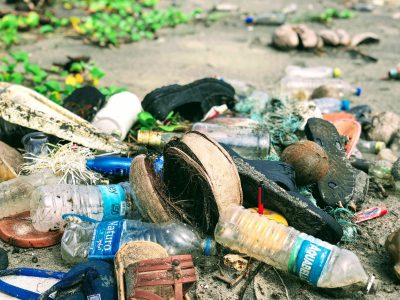
Scott-Harden continues, “Research shows that 70% of marine macro litter collected is plastic, but our mantra is that plastic is wealth!”
On his most recent trip to Flipflopi headquarters in Kenya in December, Scott-Harden spent time looking at new manufacturing techniques. He was also part of a workshop for academics to evaluate and promote different materials, including microplastics and textiles, many of which shed microfibres.
Microfibres are are microscopic natural and synthetic fibres that can be harmful if ingested by small aquatic creatures, along with chemicals sometimes used in their manufacture. For the Northumbria team, plastic is not the only issue, and collaboration across the University is aiming to highlight the fact that natural microfibres from textiles and clothing can also harm our environment.
Forensic approach
Forensics expert Dr Kelly Sheridan is part of the Northumbria University team looking specifically at the over-abundance of microfibres and their impact.
She explains, “Textile fibres, known as microfibres, and their prevalence in the environment have been studied by forensic scientists for decades. However, the majority of recent environmental studies have overlooked that knowledge and focused only on the characterisation of microplastic fibres.
"This has led to inaccurate microfibre data and much misunderstanding in the literature, culminating in a general underestimation of the threat posed by natural fibres.
“The Flipflopi research outcomes have demonstrated the strength of cross-collaboration, bringing together designers, environmental scientists and forensic scientists to tackle a global environmental challenge. We need to foster a no-regrets approach, leveraging from others’ expertise if we are fully to understand environmental challenges and develop appropriate solutions to overcome them.”
“The Flipflopi research outcomes have demonstrated the strength of cross-collaboration, bringing together designers, environmental scientists and forensic scientists to tackle a global environmental challenge."
The Flipflopi team are continuing their holistic approach to beating plastic pollution through continuous scientific and academic collaborations, and innovation in plastic recycling techniques. They are also passing on indigenous knowledge and plastic boatbuilding skills, through a new heritage boat building training centre, so that more ocean plastics can be recovered and transformed into new products and sailing vessels for the local communities.
Dr Matteo Gallidabino, lecturer in forensic chemistry at King’s College London, who also worked on the paper, feels the Flipflopi team’s full systems approach is effective.
He said, “We need to increase awareness of the environmental impact of the textile industry. Even if the clothes we wear are composed by natural materials, such as cotton or wool, some of the textile fibres they are made of can find their way into the environment and, potentially, accumulate into living organisms.
"These may be very harmful and have significant effects on biodiversity.”
The multi-disciplinary approach includes a Flipflopi petition aiming to collect one million signatures, asking for a regional legislation to ban unnecessary single-use plastics East Africa, where the problem is said to have reached epidemic proportions.
Next stop for Plastic: Remaking Our World is the Hyundai Motorstudio in Busan, South Korea. The research is published in the journal Frontiers in Ecology and Evolution.